 Brasil




-
Esterilização confiável e segura com Lyla
No fluxo de trabalho de reprocessamento, a esterilização de seus instrumentos dentários é extremamente importante.
É por isso que buscamos os melhores padrões.
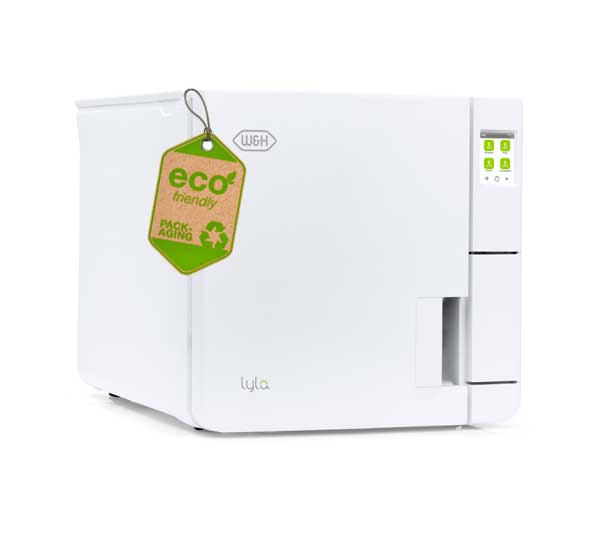
Embalagem ambientalmente amigável:
A nova embalagem ambientalmente amigável é completamente reutilizável e reciclável. Os componentes plásticos foram reduzidos a um mínimo. Para 99% de seu peso, a nova embalagem é feita de papelão e outras substâncias totalmente biodegradáveis.Vantagens:
- Atualizações inteligentes
- Ciclos super rápidos
- Rastreabilidade segura
- Operação simples
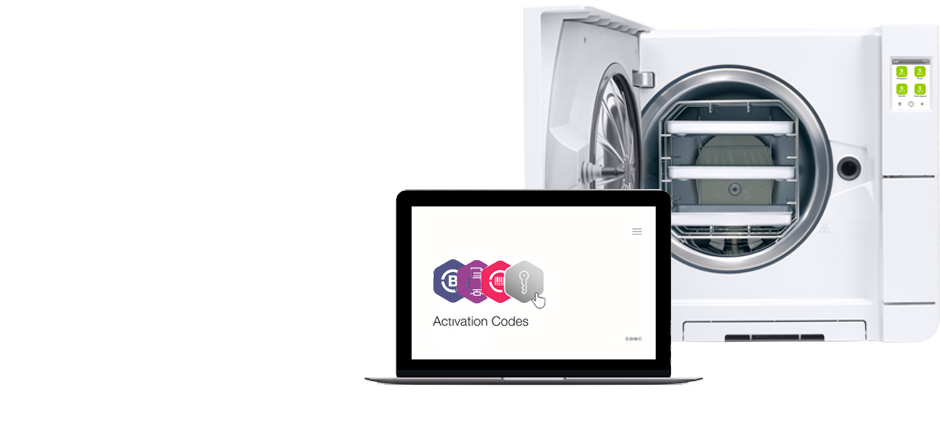
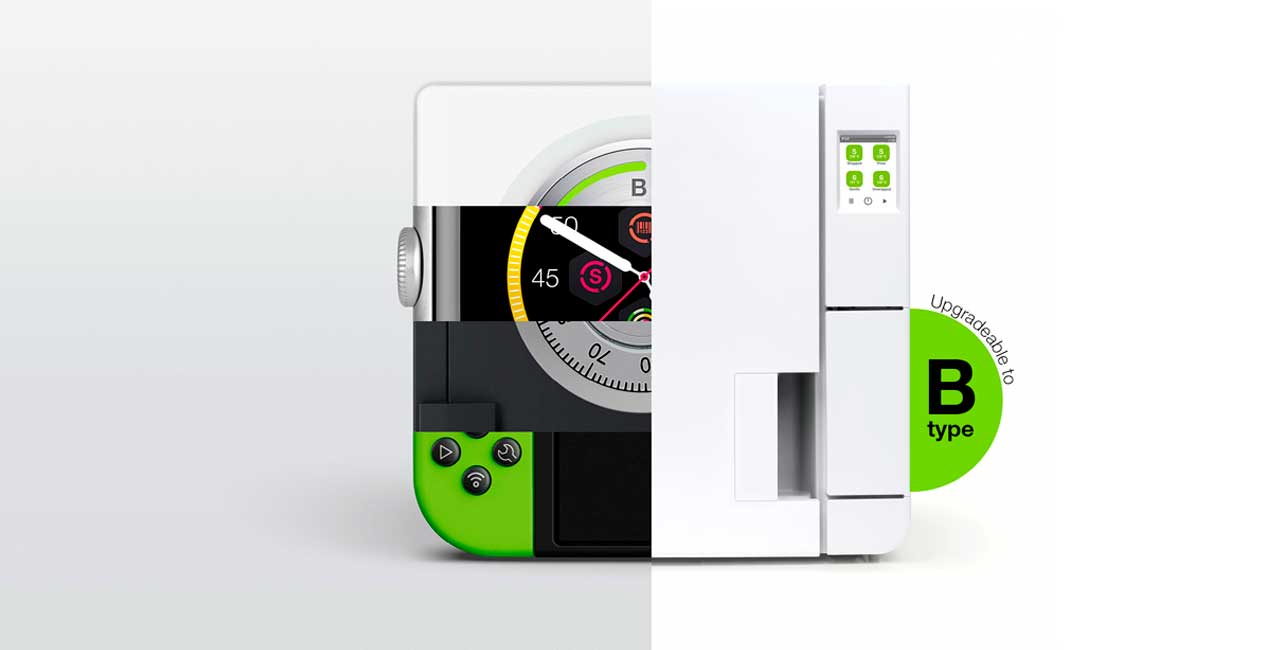
 A função "B cycle” (Ciclo B) atualiza Lyla para uma autoclave tipo B de acordo com EN 13060.
Atualização de S para B
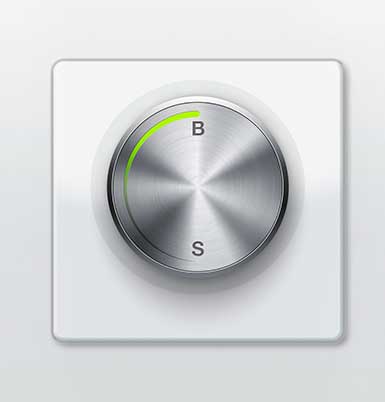 A função “B cycle” (ciclo B) atualiza Lyla de forma simples e rápida para uma autoclave tipo B de acordo com EN 13060.
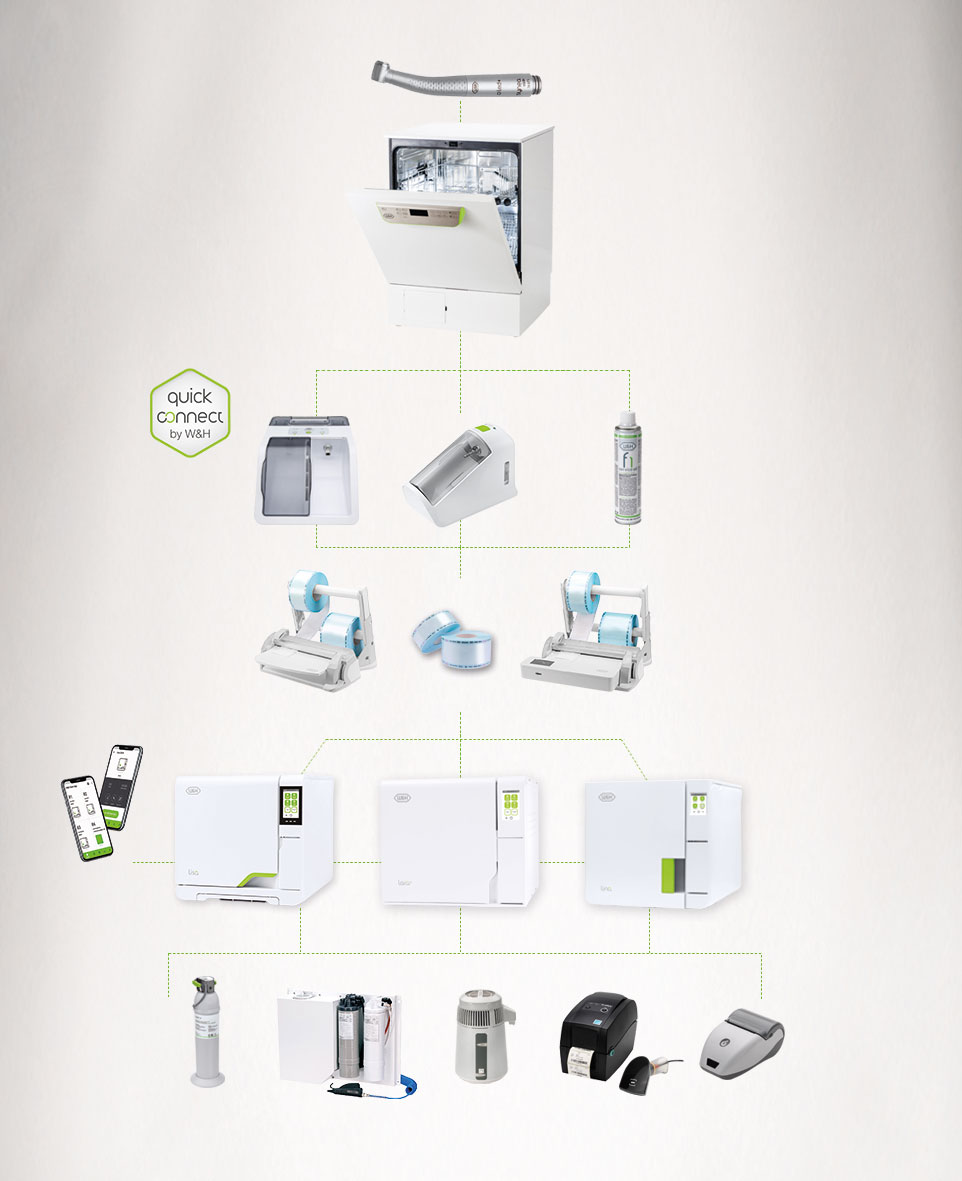
 Armazenamento remoto de dados A função "Remote data storage" possibilita salvar os ciclos diretamente no computador.
Remote data storage
(Armazenamento remoto de dados)
 A função “Traceability (Rastreabilidade) permite identificar o usuário e confirmar a liberação da carga.
Traceability
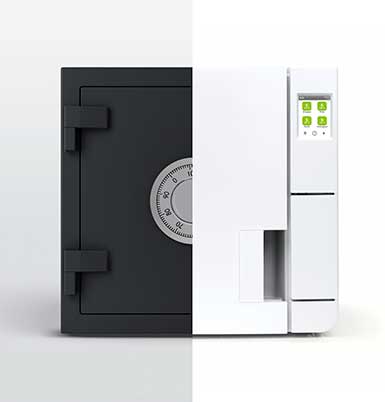 A identificação é protegida por uma senha inserida diretamente na autoclave Lyla e no aplicativo W&H Steri App.
Seis etapas para personalizar sua autoclave:
- Adquira o Activation Code de sua escolha em um revendedor autorizado W&H em seu país/região.
- Após receber o código de login respectivo, acesse activation.wh.com
- Digite este código de acesso junto com o número de série e o tipo/modelo de sua autoclave.
- Seu Activation Code, individual e seguro, será gerado.
- Digite o Activation Code no menu de sua autoclave.
- A função está disponível.
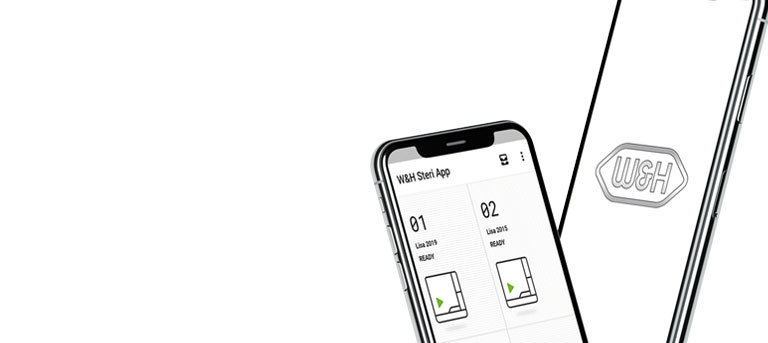
Compatibility:
The application is compatible with all sterilizers currently available.
Available languages: EN, IT, FR, DE, ES, ZH-CN, JP
Main features:
Remote control of your sterilizer: the user can remotely command up to 4 sterilizers.
Advanced traceability: EliTrace feature is now fully supported and the App permits to create instrument database directly from your smart device. In addition to this function, the management and tracking of dental instruments is integrated.
Reports creation: the App allows making intervention reports in order to collect data regarding specific treatments.
User management: creation and handling of sterilizer users directly from your smart device.
Backup functionality: all the cycle reports are automatically saved to assure more protection of data.
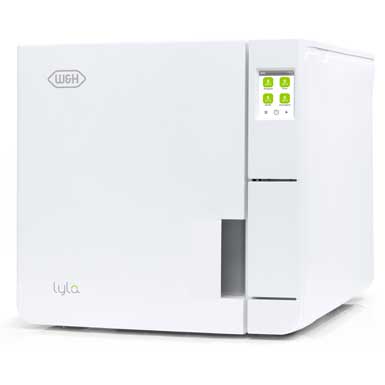

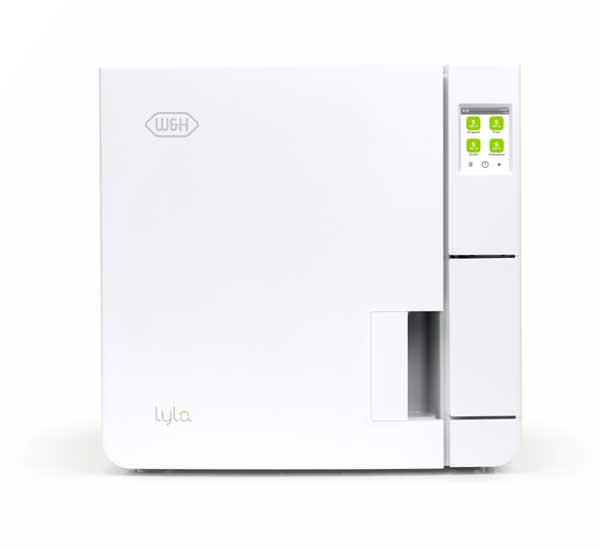
Esterilizador Lyla
fornecido com rack reversível, 3 bandejas de alumínio, tubo de drenagem, suporte de bandejas, unidade USB de 8 GB, ferramenta de abertura de porta, teste de fábrica,
50 HzLyla 17
REF 19951150Tamanho da câmara 17 litros
Lyla 22 (220 V)
REF 19952150Tamanho da câmara 22 litros
Lyla 22 (110 V)
REF 19952350Tamanho da câmara 22 litros



Esterilizador Lyla
fornecido com rack reversível, 3 bandejas de alumínio, tubo de drenagem, suporte de bandejas, unidade USB de 8 GB, ferramenta de abertura de porta, teste de fábrica,
60 HzLyla 17
REF 19951250Tamanho da câmara 17 litros
Lyla 22 (220 V)
REF 19952250Tamanho da câmara 22 litros
Lyla 22 (110 V)
REF 19952350Tamanho da câmara 22 litros
Área de Download
FAQ
-
Which is the maximum noise level of Lyla?
The max. noise level of Lyla is 65.5 dB. mais
-
Warning about consumable replacement.
POSSIBLE CAUSE
A consumable needs to be replaced.
SOLUTION
Order the requested consumable (door seal and HEPA/bacteriological filter) and replace it. See the chapter “Maintenance” in the Instructions for Use. mais -
When starting a cycle, the chamber door locks but re-opens immediately. The “Open the door” message appears.
POSSIBLE CAUSE
Door seal not properly placed.
SOLUTION
Ensure that the door seal is correctly inserted around the whole circumference.
POSSIBLE CAUSE
Door jammed by external objects or by the load itself.
SOLUTION
Remove any objects interfering with the chamber door. Check for interference between the door and the chamber furniture and/or the load. mais -
The sterilizer enters into “Standby mode” immediately after being switched on.
POSSIBLE CAUSE
The unit was turned off while in standby mode.
SOLUTION
Press the standby mode button to exit. mais -
The sterilization (PROCESS) phase of a sterilization cycle was longer than expected.
POSSIBLE CAUSE
The chamber temperature dropped below the minimum threshold and the software performed a successful recovery.
SOLUTION
Wait for cycle completion. If the problem occurs frequently, contact an authorizsd W&H service partner. mais -
Warning about programmed maintenance.
POSSIBLE CAUSE
The maintenance program needs to be carried out.
SOLUTION
Contact an authorised W&H service partner. mais -
The cycle report printer does not work.
POSSIBLE CAUSE
Printer not properly connected or not powered.
SOLUTION
Check the data and power connection to the printer. mais -
The sterilizer is connected to an automated water supply system, there is no clean water in the tank and the automatic water filling does not fill the water.
POSSIBLE CAUSE
Water filling system not connected.
SOLUTION
Connect the water filling system to the sterilizer. (see Instructions for Use).
POSSIBLE CAUSE
When the water filling system attempted to fill the tank, water was temporarily unavailable.
SOLUTION
Since the water tank filling is attempted only once in-between cycle execution, this event inhibits water feeding. Switch the sterilizer OFF and then ON again.
Check the external water supply system.
Check for water leaks from the sterilizer.
POSSIBLE CAUSE
Faulty MIN water level sensor in the clean water tank.
SOLUTION
Contact an authorised W&H service partner. mais -
How do I clean the water tanks and what products should I use?
Water tank cleaning instructions are provided in the Instructions for Use, chapter “Maintenance”. In addition, a video description is available: • in the sterilizer, in the maintenance section of the menu; • in the Consumables & Accessories and Video Tutorial section of this website. mais
-
How do I change consumable components on my sterilizer?
Consumable replacement instructions are provided in the Instructions for Use, chapter “Maintenance”. In addition, a video description is available: • in the sterilizer, in the maintenance section of the menu; • in the Consumables & Accessories and Video Tutorial section of this website. mais
-
No cycles are stored in the cycle history menu.
POSSIBLE CAUSE
An electronic board was replaced when serviced.
SOLUTION
The memory of the old board can not be restored. Consult the cycle history in the USB pen drive. mais -
The sterilizer remains switched OFF.
POSSIBLE CAUSE
The main switch or network circuit breaker is OFF.
SOLUTION
Activate the main switch or network circuit breaker (ON).
POSSIBLE CAUSE
No voltage at the socket.
SOLUTION
Check the building electrical supply.
POSSIBLE CAUSE
The power cord is not connected properly.
SOLUTION
Check and connect the power cord properly. mais -
Water is leaking at the front of the sterilizer.
POSSIBLE CAUSE
Leaks through the chamber door seal.
SOLUTION
Clean or replace the door seal. Clean the door surface facing the chamber.
POSSIBLE CAUSE
Internal leak.
SOLUTION
Contact an authorized W&H service partner. mais -
At the end of the cycle, there is residual water on load.
POSSIBLE CAUSE
Sterilizer not properly levelled.
SOLUTION
Place the sterilizator on a flat, level surface.
POSSIBLE CAUSE
Overloaded chamber.
SOLUTION
Comply with the maximum load weight limits for each type of load. Always use the chamber rack for trays and cassettes.
POSSIBLE CAUSE
Chamber filter clogged.
SOLUTION
Remove and clean the chamber filters.
POSSIBLE CAUSE
Chamber filter cap mispositioned.
SOLUTION
Mount the chamber filter cap properly (see chapter “Monthly or 50-cycle maintenance - Cleaning the chamber filter” in the Instructions for Use).
POSSIBLE CAUSE
Load incorrectly placed.
SOLUTION
Follow the recommendations as listed in chapter “Load maintenance and preparation” in the Instructions for Use. mais -
Stains, spots, or colour change on instruments.
POSSIBLE CAUSE
Instruments rinsed with tap water and not dried before sterilization.
SOLUTION
Ensure that instruments are rinsed with distilled or demineralized water and completely dry before they are placed in the sterilizer.
POSSIBLE CAUSE
Use of water of poor quality or water containing chemical substances.
SOLUTION
Drain both water tanks. Use good quality water (see chapter “Water quality” in the Instructions for Use).
POSSIBLE CAUSE
Organic or chemical residues on the instruments
SOLUTION
Clean, rinse, and dry instruments before placing them in the sterilizer (see chapter “Load maintenance and preparation” in the Instructions for Use.
POSSIBLE CAUSE
Dirt in chamber, trays, tray rack.
SOLUTION
Clean the chamber and wash the chamber furniture.
POSSIBLE CAUSE
Contact between instruments of different materials.
SOLUTION
Ensure that instruments of different materials do not touch each other (aluminium, carbon or stainless steel, etc.); place them on different trays or cassettes or pouch them (see chapter “Load maintenance and preparation” in the Instructions for Use).
POSSIBLE CAUSE
Scale deposits on the chamber.
SOLUTION
Clean the chamber and use good quality water (see chapter “Water quality” in the Instructions for Use). mais -
Warning about saving to the USB (HTML and SCL files)
POSSIBLE CAUSE
The USB drive is disconnected or full.
SOLUTION
Check presence and condition of the USB drive. If the problem persists, contact an authorised W&H service partner. mais -
Preciso documentar os resultados de todos os testes periódicos?
A W&H recomenda registrar todos os testes periódicos, reparos e modificações na autoclave em um livro de registros, incluindo data e assinatura da pessoa que realizou o teste ou outra atividade. A obrigatoriedade de registro é regulamentada por diretrizes locais/nacionais. mais
-
O que é validação?
Validação é um procedimento de teste realizado por uma autoridade oficial, comprovando a eficácia da sua autoclave. A obrigatoriedade e a frequência da validação são regulamentadas por diretrizes locais/nacionais. mais
-
Preciso realizar testes periódicos na minha autoclave W&H?
Todas as autoclaves W&H possuem ciclos de teste (teste B&D/Helix, teste de vácuo). A obrigatoriedade e a frequência dos testes são regulamentadas por diretrizes locais/nacionais. mais
-
Devo embalar/selar meus instrumentos? Por quanto tempo posso armazená-los após a esterilização?
Para garantir que seus instrumentos continuem armazenados em um ambiente esterilizado, após uma esterilização adequada até o momento do uso, a W&H recomenda acondicioná-los por meio de sistemas de vedação adequados antes da esterilização. O período de armazenamento recomendado pode ser encontrado nas orientações do fabricante do material de embalagem. Para mais informações, por favor, entre em contato com o seu revendedor autorizado. mais
-
Qual qualidade da água devo usar para a minha autoclave?
A qualidade da água para uso em esterilizadores / autoclaves é especificada internacionalmente por normas e diretrizes. O motivo é que a água de má qualidade pode causar sérios danos à sua autoclave ou comprometer todo o processo de esterilização. Consequentemente, deve-se usar água com condutividade inferior a 10 µS/cm na América do Norte e 15 µS/cm para o restante do mundo na sua autoclave W&H. Os dispositivos de tratamento de água Multidem e Osmo foram especialmente projetados para preparar água adequada (consulte a seção "Qualidade da água" nas Instruções de uso). mais
-
Quem devo contatar para validar e manter minha autoclave?
A validação deve ser realizada por uma autoridade oficial. As tarefas de manutenção devem ser realizadas por um técnico qualificado e autorizado pela W&H. mais
-
Minha autoclave precisa de alguma qualificação/validação periódica?
A validação geralmente compreende uma série de testes definidos em normas internacionalmente reconhecidas. Esses testes começam para cada dispositivo com os testes de fábrica da W&H. Além disso, a documentação correspondente é fornecida com o seu dispositivo. Antes de colocar o dispositivo em funcionamento, o técnico realiza outras verificações para garantir que o dispositivo funcione corretamente. Em seguida, dependendo das leis e diretrizes nacionais/regionais, o dispositivo deve ser submetido a uma qualificação de desempenho, renovada em intervalos regulares. Para mais informações, entre em contato com o seu revendedor. mais
-
Por quanto tempo devo arquivar a documentação dos testes regulares?
Guarde os resultados de acordo com as leis e diretrizes específicas do seu país/região. Esses registros também podem ser úteis em caso de manutenção / assistência técnica. mais
Instruções de uso
Para visualizar a Atualização de Higiene e Manutenção em outros idiomas (EN ISO 17664:2017), acesse a página Central de Downloads.
Vídeos e tutoriais
-
Programas de esterilização Lyla
Ciclo de esterilização S Embalado 134 S Prion 134 S Delicado 121 S Não embalado 134 Temperatura: 134 °C 134 °C 121 °C 134 °C Tempo de espera (minutos): 4 18' 30'' 20' 30'' 4 Tempo total do ciclo (minutos) incluindo secagem completa: Automático desde Carga
típicaAutomático desde Carga
típicaAutomático desde Automático desde Carga
típicaLyla 17 38' a 45'42' 52' a 59'56' 61' a 64' 20' a 26' 23' Lyla 22 (220 V) 39' a 46'43' 53' a 60'57' 62' a 66' 21' a 27' 24' Lyla 22 (110 V) 49' a 56'51' 63' a 71'65' 69' a 73 28' a 35' 30' Lyla 17/22 – Cargas:máximo sólido 4 kg/típico 2 kg/máximo poroso 0,5 kgmáximo de 4 kg não embaladoCarga de recipiente Lyla 17/22: máxima 4 kg não aplicável Ciclos de teste: Bowie e Dick/teste de vácuo Item fornecido com rack reversível, 3 bandejas de alumínio, tubo de drenagem, suporte de bandejas, unidade USB de 8 GB, ferramenta de abertura de porta, teste de fábrica
Autoclave Lyla
Lyla 17 Lyla 22 Tipo: RIN-210 RIN-210 Tamanho da câmara: 17 l 22 l Alimentação elétrica: 200–240 V AC; 50 Hz ou 60 Hz; 10 A; monofásica
200–240 V AC; 50 Hz ou 60 Hz; 10 A monofásico
100–125 V AC; 50 Hz/60 Hz; 12 A monofásico
Entrada de alimentação: 2,0–2,4 kW 220 V: 2,0–2,4 kW
110 V: 1,2–1,5 kWDimensão geral
(largura × altura × profundidade):465 × 452 × 646 mm Peso: 40 kg 42 kg Reservatório de água doce/usada: 4,8/4,8 l Faixa de operação: 7 até 10 ciclos Espaço utilizável na câmara:
(largura × altura × profundidade)¹:195 × 195 × 312 mm 195 × 195 × 400 mm Opções de conexão: 1 conexão USB na frente (1 adicional na parte traseira como opção), válvula de enchimento automático de água (opcional) (1) O espaço utilizável é referido como configuração de rack padrão.
As autoclaves Lyla foram projetadas, certificadas e validadas com as mais rigorosas diretivas e padrões: N°2017/745 Portaria sobre dispositivos médicos 2014/68/UE Diretiva de equipamentos sob pressão EN 13060 Esterilizadores a vapor pequenos IEC 61326-1 Compatibilidade eletromagnética IEC 61010-1 Requisitos de segurança do esterilizador
IEC 61010-2-040 Requisitos especiais para esterilizadores e aparelhos de limpeza e desinfecção
IEC 61770 Aparelhos elétricos para conexão com o sistema de abastecimento de água
A autoclave pode ser validada de acordo com a norma EN ISO 17665-1


