W&H Headquarters - EN




Dosing calculator
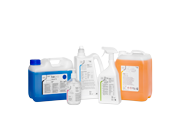
The dosage calculator for our BePro – Cleaning & Disinfection Agents calculates the required amount of concentrate and water for the desired amount of working solution.
-
BePro – Surfaces
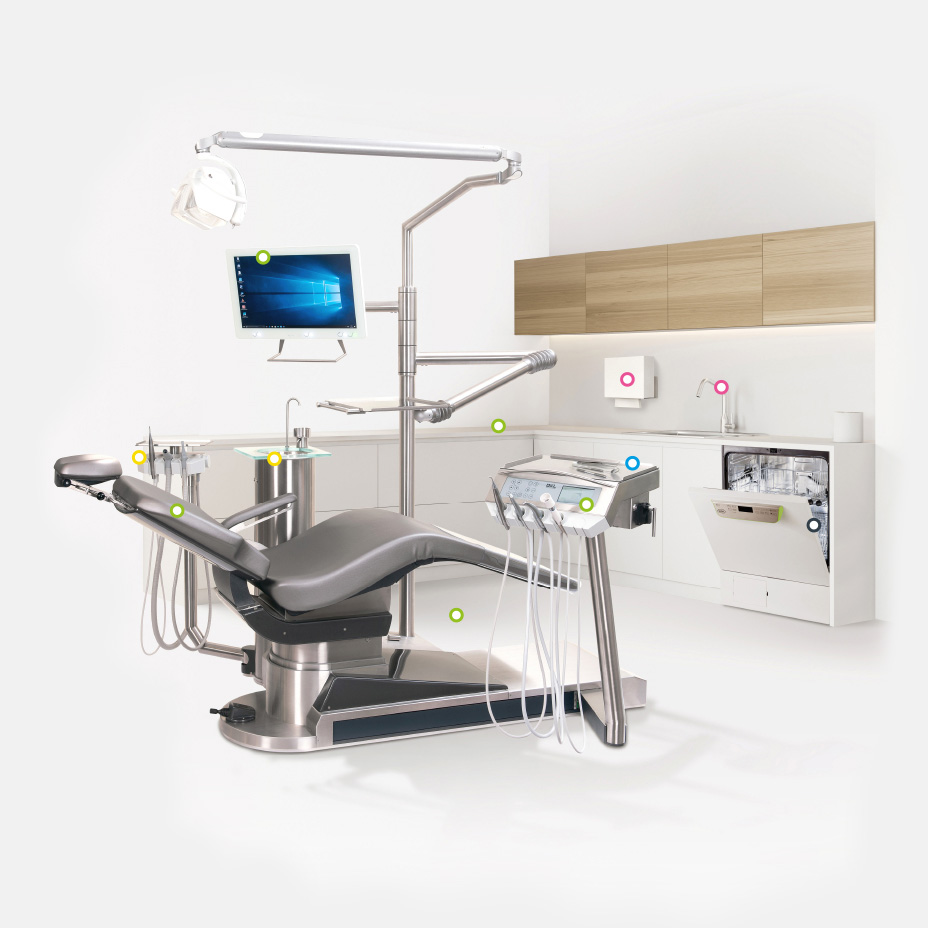
For the cleaning and disinfection of
› non-invasive medical devices e.g. dental units incl. upholstery, exterior parts of handpieces, patient environment.
› large surfaces e.g. reception desks, waiting rooms, floors, handles, doors. More
BePro – Instruments
For the decontamination of dental instruments e.g. scalers, probes, scissors, pliers, burs, files. More
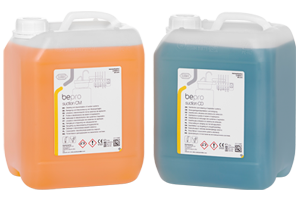
BePro – Suction Systems
For the cleaning, disinfection and maintenance of dental unit’s suction system and spittoon bowl. More
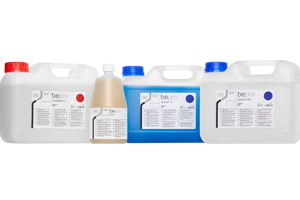
BePro – Automated Reprocessing
For thermal washer disinfectors or washers like the W&H Thed+ or Thed. More
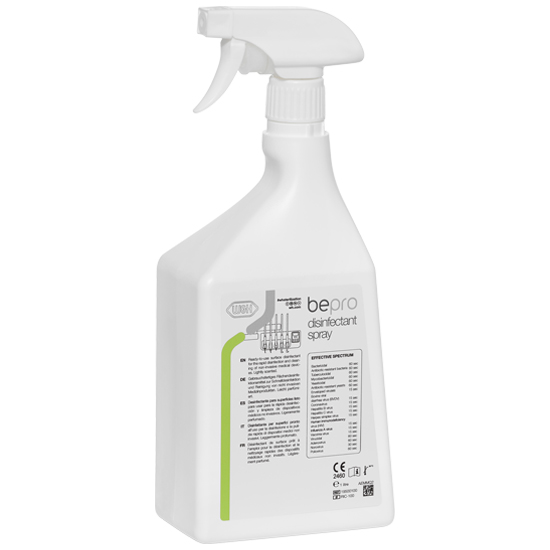

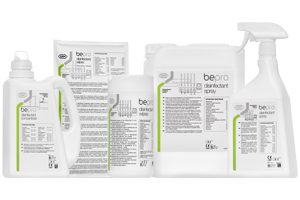
BePro Disinfectant Spray
Composition in 100 g
20 g ethanol, 28 g 1-propanol,
0.056 g quaternary ammonium compounds, auxiliaries and waterBePro Disinfectant Spray
REF 195001001 litre refillable bottle
with spray head
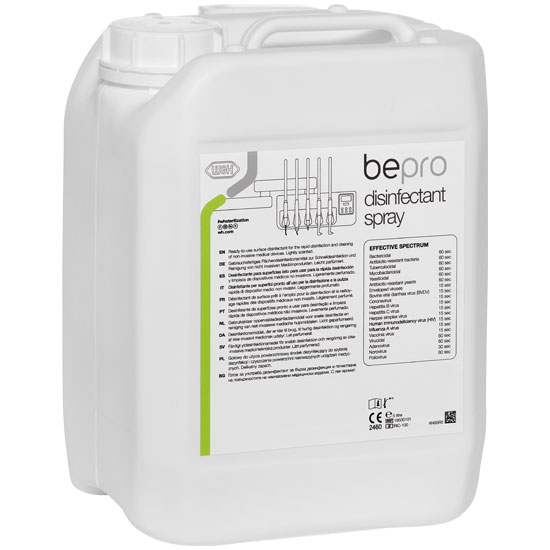

BePro Disinfectant Spray
Composition in 100 g
20 g ethanol, 28 g 1-propanol,
0.056 g quaternary ammonium compounds,
auxiliaries nd waterBePro Disinfectant Spray
REF 195001015 litre refill canister
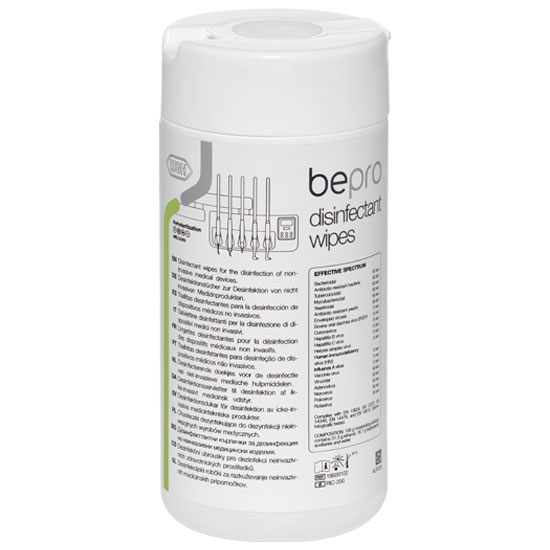

BePro Disinfectant Wipes
Composition in 100 g
31.3 g ethanol, 16.7 g isopropanol,
auxiliaries and waterBePro Disinfectant Wipes
REF 19500102120 wipes refillable plastic tub
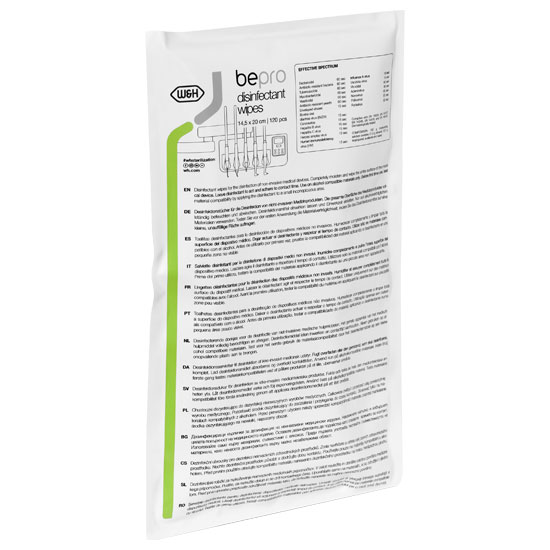

BePro Disinfectant Wipes
Composition in 100 g
31.3 g ethanol, 16.7 g isopropanol,
auxiliaries and waterBePro Disinfectant Wipes
REF 19500103120 wipes refillable soft pack
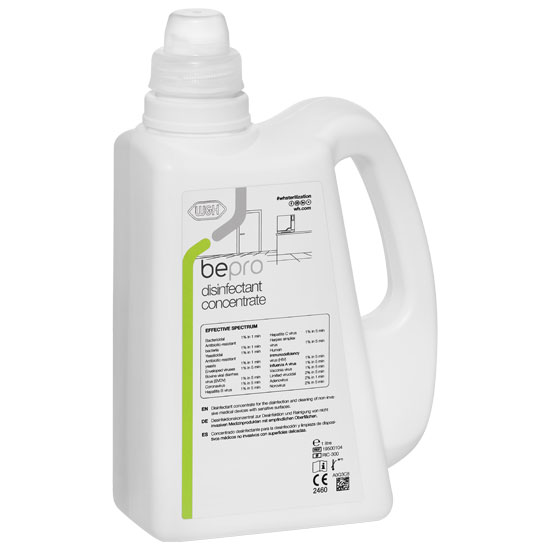

BePro Disinfectant Concentrate
Composition in 100 g
10 g quaternary ammonium compounds, auxiliaries and waterBePro Disinfectant Concentrate
REF 195001041 litre bottle

BePro Disinfectant I
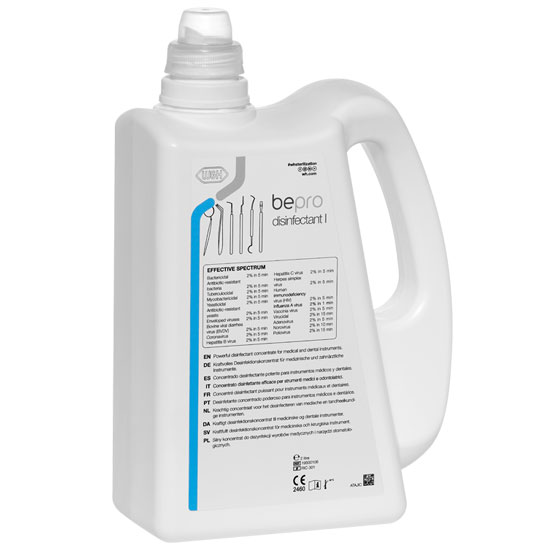
Composition in 100 g
9.1 g alkylamine,
3.6 g didecyldimethylammonium chloride,
corrosion inhibitors, auxiliaries and waterBePro Disinfectant I
REF 195001062 litre bottle

BePro soaking bath
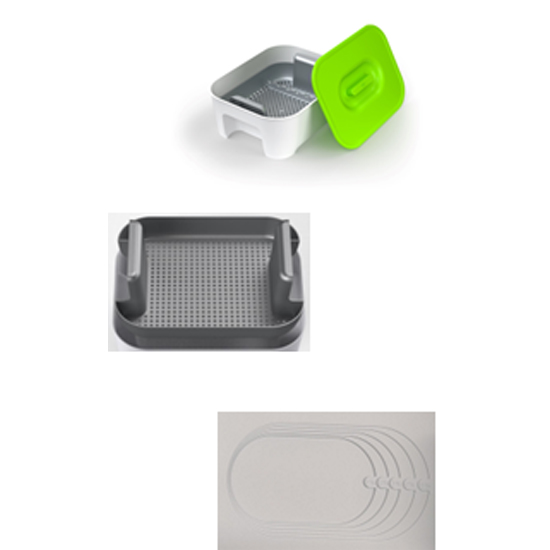
Soaking basin for the immersion of dental
instruments in the decontamination phase.
BePro soaking bath
REF 19500300Large-capacity inner basket
Integrated instrument draining system
Interior dividers
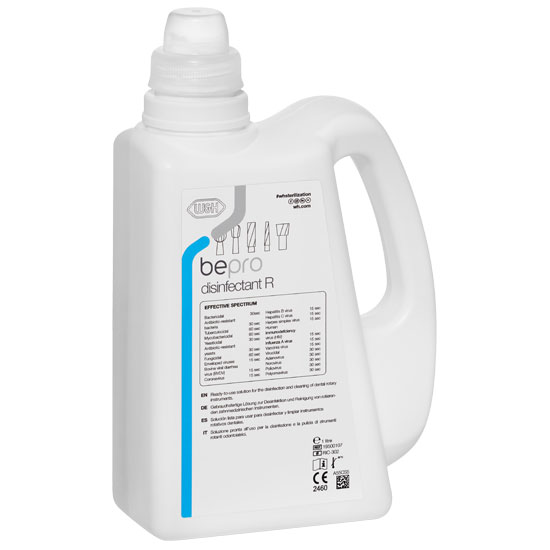

BePro Disinfectant R
Composition in 100 g
32 g isopropanol, 0.7 g 2-phenoxyethanol, 0.2 g quaternary ammonium compounds, corrosion inhibitors, auxiliaries and waterBePro Disinfectant R
REF 195001071 litre bottle
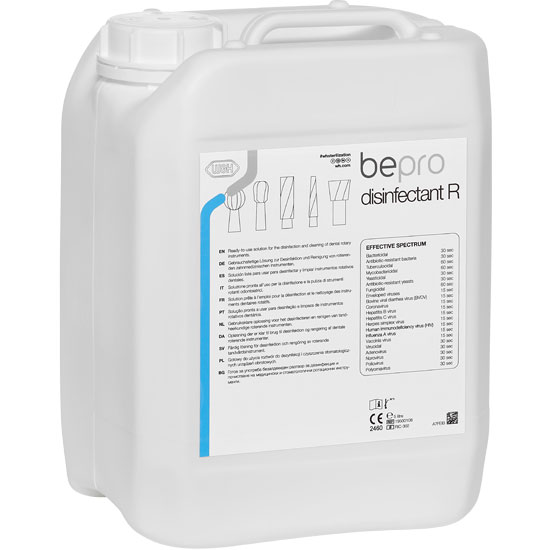

BePro Disinfectant R
Composition in 100 g
32 g isopropanol, 0.7 g 2-phenoxyethanol, 0.2 g quaternary ammonium compounds, corrosion inhibitors, auxiliaries and waterBePro Disinfectant R
REF 195001085 litre refill canister
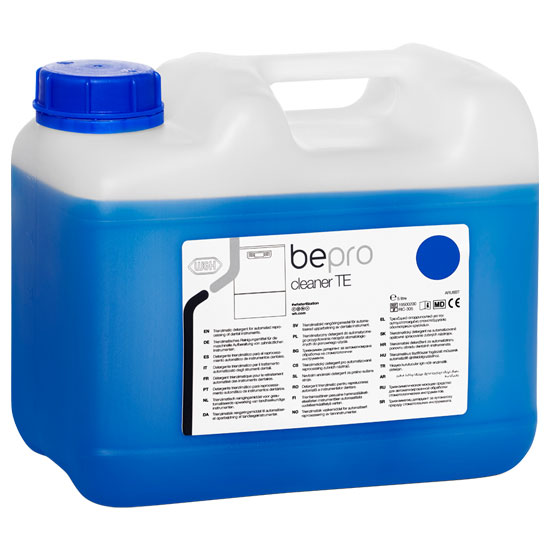

BePro Cleaner TE
Composition
Non-ionic surfactants, enzymes (protease, amylase, lipase), sequestrants, colourantsBePro Cleaner TE
REF 195002005 litre canister
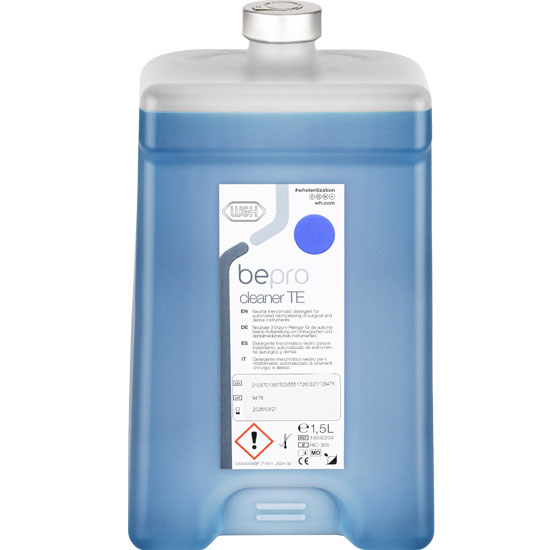

BePro Cleaner TE
Composition
Non-ionic surfactants, enzymes (protease, amylase, lipase), sequestrants, colourants
BePro Cleaner TE
REF 195002041.5 litre cartridge
(suitable with tabletop devices Thed+, Thed)
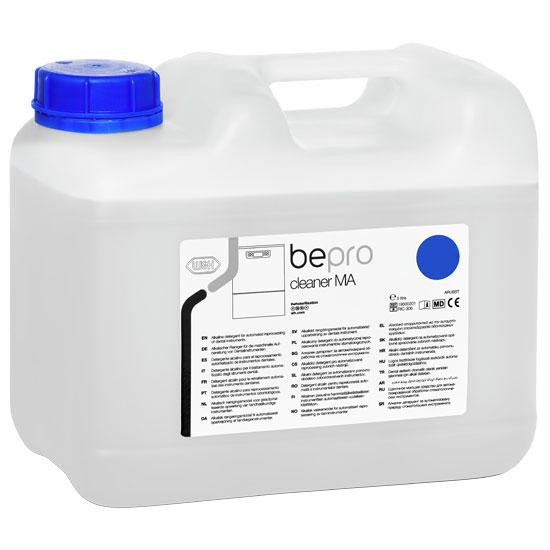

BePro Cleaner MA
Composition
Sequestrants, non-ionic surfactants, potassium hydroxide, other excipientsBePro Cleaner MA
REF 195002015 litre canister
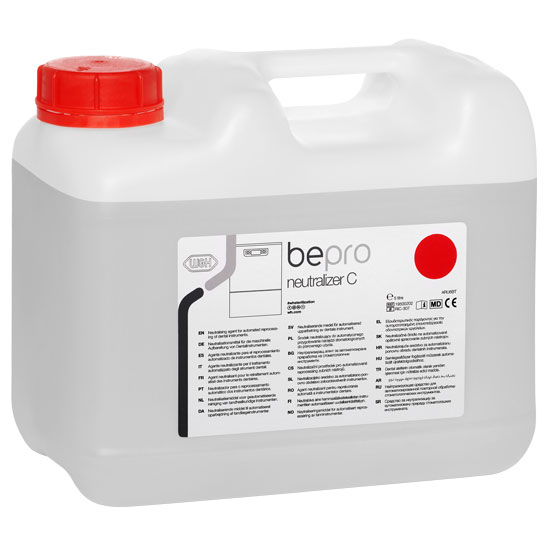

BePro Neutraliser C
Composition
Organic acidBePro Neutraliser C
REF 195002025 litre canister
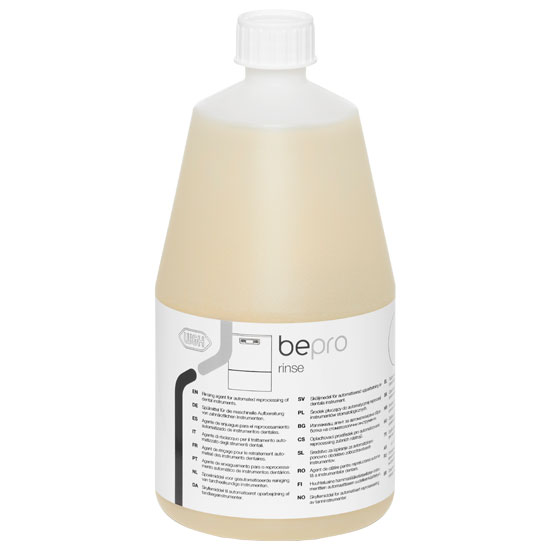

BePro Rinse
Composition
Non-ionic surfactants, rinse and dry activator agents, sequestranBePro Rinse
REF 195002061 litre bottle
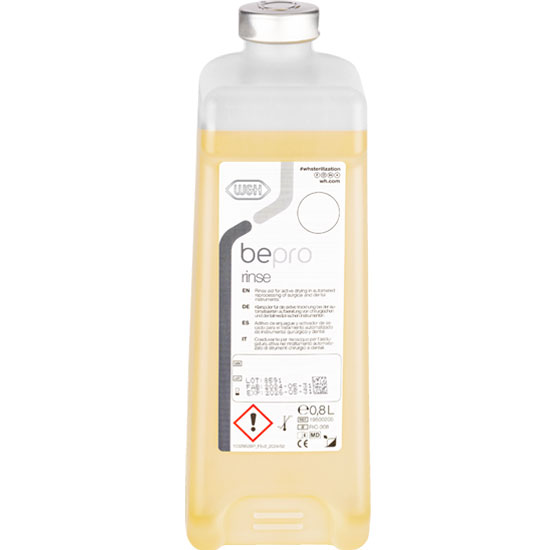

BePro Rinse
Composition
Non-ionic surfactants, rinse and dry activator agents, sequestran
BePro Rinse
REF 19500205800 ml cartridge
(suitable with tabletop devices Thed+, Thed)
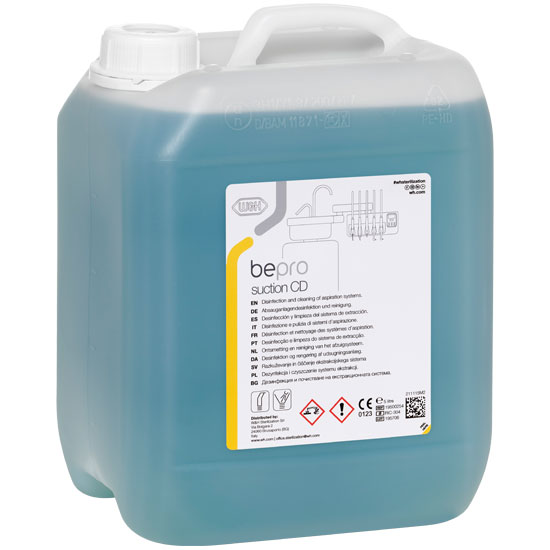

BePro Suction CD
Composition
2-aminoethanol, trisodium nitrilotriacetate, propan-2-ol, benzalkonium chlorideBePro Suction CD
REF 195002545 litre canister
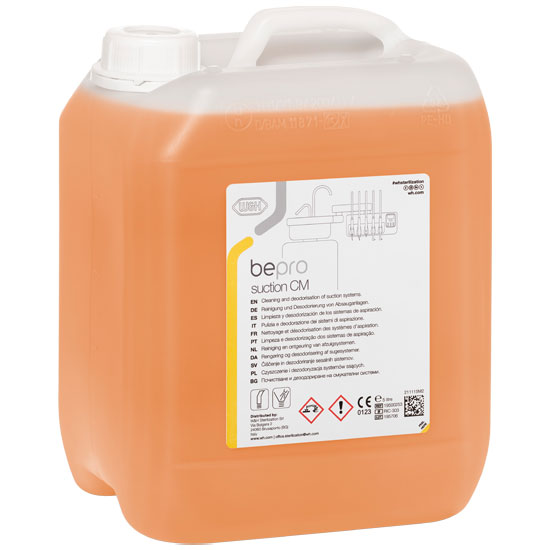

BePro Suction CM
Composition
Sulphamide acid, QUACs, surfactantsBePro Suction CM
REF 195002535 litre canister
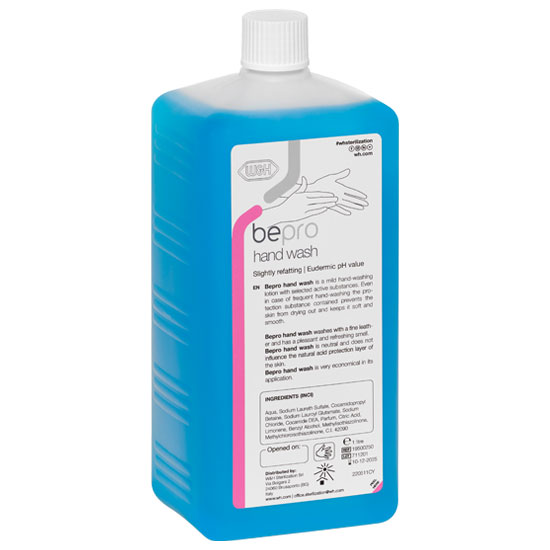

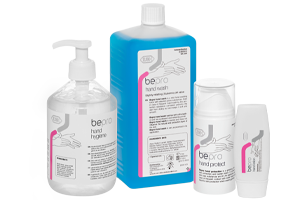
BePro Hand Wash
BePro Hand Wash
REF 195002501 litre bottle with dispenser
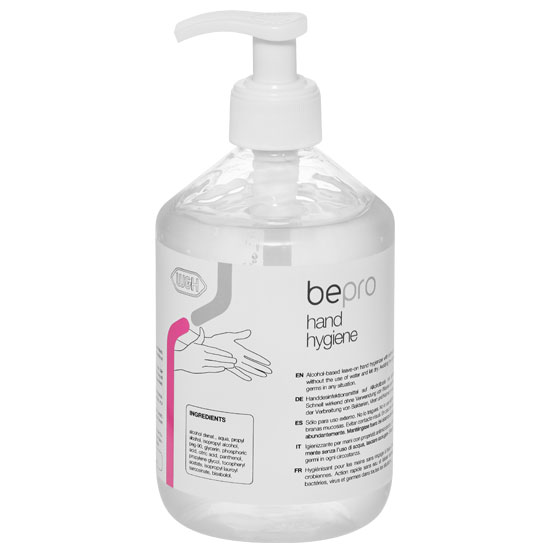

BePro Hand Hygiene
Composition in 100 g
52.8 g ethanol, 19.0 g 1-propanol,
2.8 g isopropanol, moisturisers, emollients, vitamin E acetate, panthenol, and bisabololBePro Hand Hygiene
REF 19500105500 ml bottle with dispenser
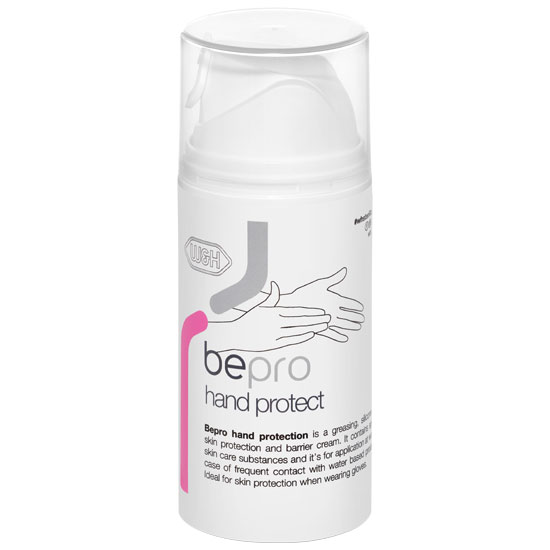

BePro Hand Protection
BePro Hand Protection
REF 19500251100 ml tube
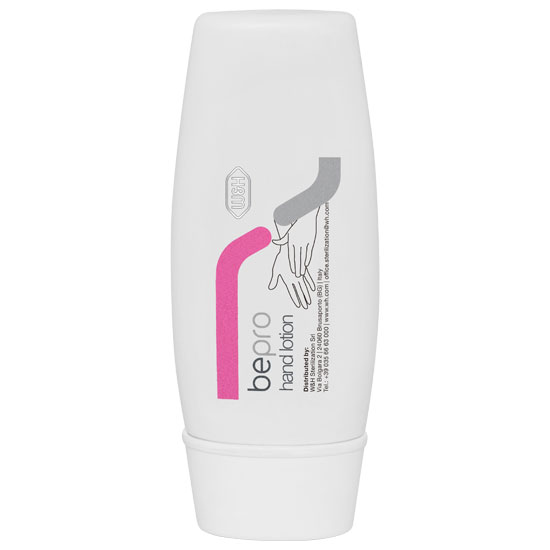

BePro Hand Lotion
BePro Hand Lotion
REF 1950025235 ml tube
Download Area
FAQ
-
How do I choose the right disinfectant for my practice?
Depending on the categories of pathogenic microorganisms on which the disinfectant is effective, different levels of disinfection are distinguished; high, intermediate and low. In order to ensure total safety in the practice, for both patients and operators, the choice of disinfectant to be used must always fall on a product that ensures a high level of disinfection. more
-
Are all pathogens equally resistant to disinfectants?
No, pathogens have very different resistances depending on the disinfectant substance used to try to eliminate them. The least resistant pathogens range from the encapsulated viruses up to mycobacteria, which are instead the most resistant and require a high level of disinfection to eliminate them. more
-
What are the main aspects I have to consider when choosing a disinfectant?
There are three fundamental aspects that must always be considered when choosing a disinfectant: the desired efficacy, i.e. the ability of the product to be active on a wide range of pathogens, the expected efficiency, i.e. the ability of the product to reach its maximum effectiveness in the shortest possible time and, in the case of concentrated products, with the lowest possible concentration and finally the necessary compatibility, i.e. the possibility of using the product without the risk of damaging, destroying or invalidating its use of the tool or surface to be treated. more
-
Are there pathogens more resistant than mycobacteria?
Yes, the most difficult pathogens to eliminate are spores and prions, for to eliminate of which it is necessary to resort to the use of the autoclave for sterilization. more
-
Are all disinfectants the same?
Disinfectants are not all the same, there are many different types based on their formulation and the active principle(s) contained therein. more
Instructions for use
Find all languages of the Update Hygiene and Maintenance (EN ISO 17664:2017) in the Download Centre.
Videos & Tutorials
-
How do I choose the right disinfectant for my practice?